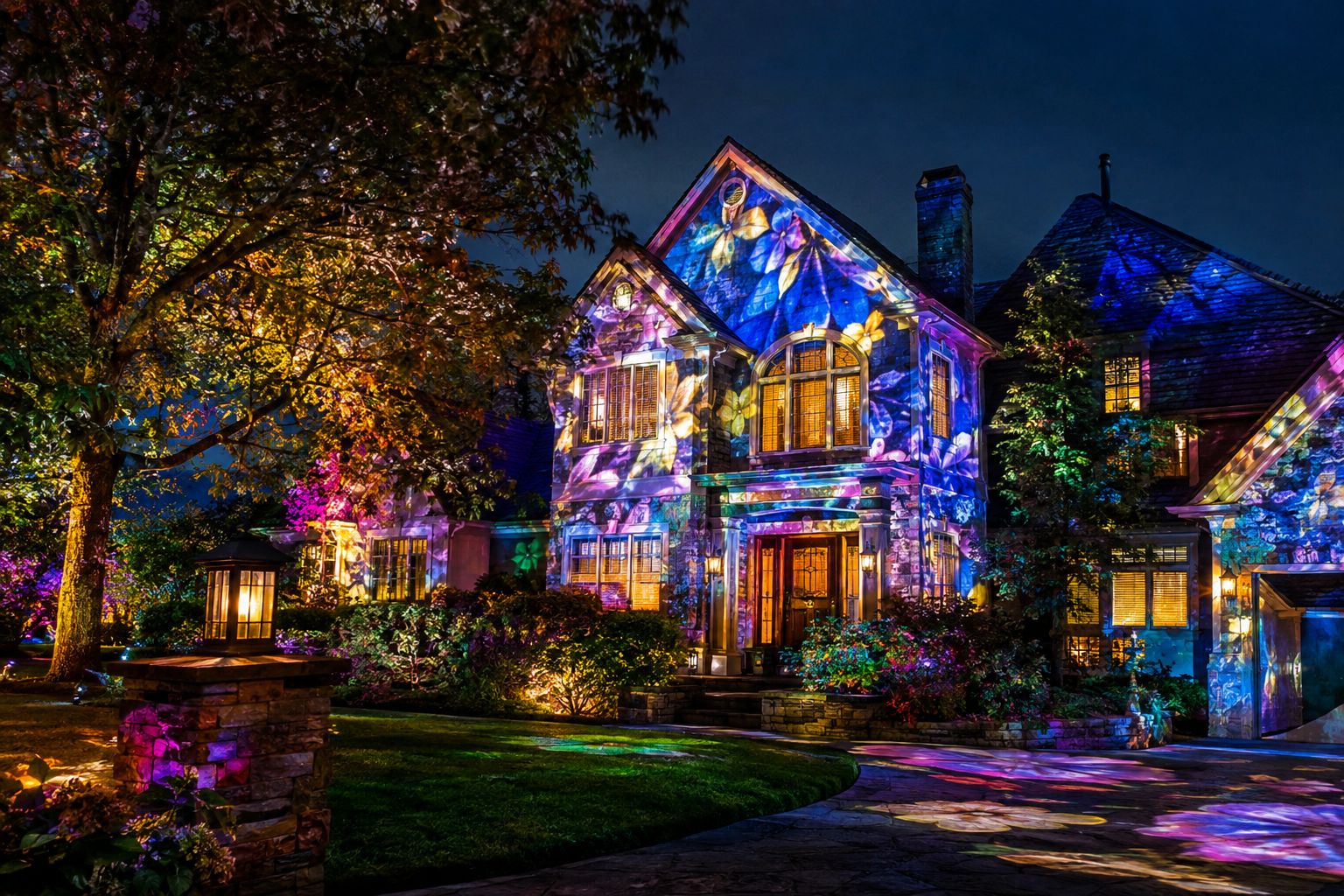
Projection mapping isn’t just for professional events—it’s the secret to creating captivating displays right at home. Whether you’re planning to illuminate your house facade for the holidays, bring a garage door to life, or add wow-factor to garden objects and windows, projection mapping makes it possible. This guide walks you through setup, safety, and product choices, putting practical homeowner solutions front and center.
Why Projection Mapping at Home?
Yard and object projection mapping transforms ordinary spaces into storytelling canvases using precise digital light. With the right enclosure, projector, and mapping film, you can project onto virtually any surface: siding, garage doors, shrubbery, sculptures, or even windows—without permanent changes to your home or landscape.
Start with the Homeline Projector Enclosure
For most residential projection mapping projects—including holiday facade displays, window illuminations, and backyard installations—the Homeline Projector Enclosure is designed with simplicity and safety in mind. This compact, fan-cooled housing protects your projector from mild weather, accidental splashes, and debris, blending into suburban and urban settings. It supports easy cable access and maintenance; fit is checked for each projector model.
Explore Homeline & request projector-fit guidance
Confirm projector dimensions, lens position, ventilation, and power before ordering.
Vivid Mapping on Home Exteriors
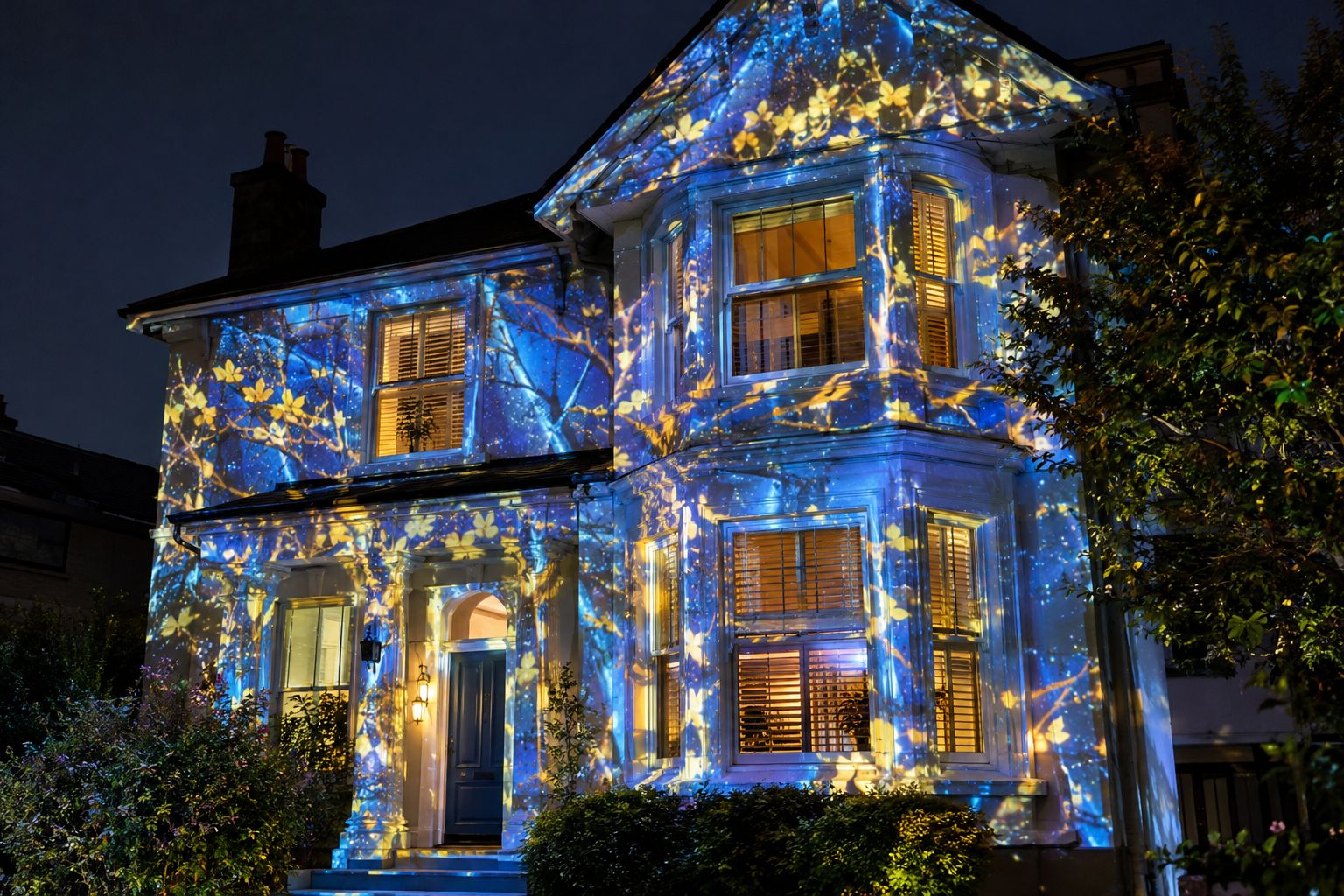
Imagine your entire house facade or garage door transformed into a moving spectacle—animated snow, faux brick, or playful effects—delighting family and neighbors with every projection. This visual impact is achievable for most homes with the right setup, even on curved or textured surfaces.
What Surfaces Can You Map?
Modern projection mapping software makes it possible to map all kinds of surfaces:
- House siding and brick: Turn your whole exterior into a dynamic scene.
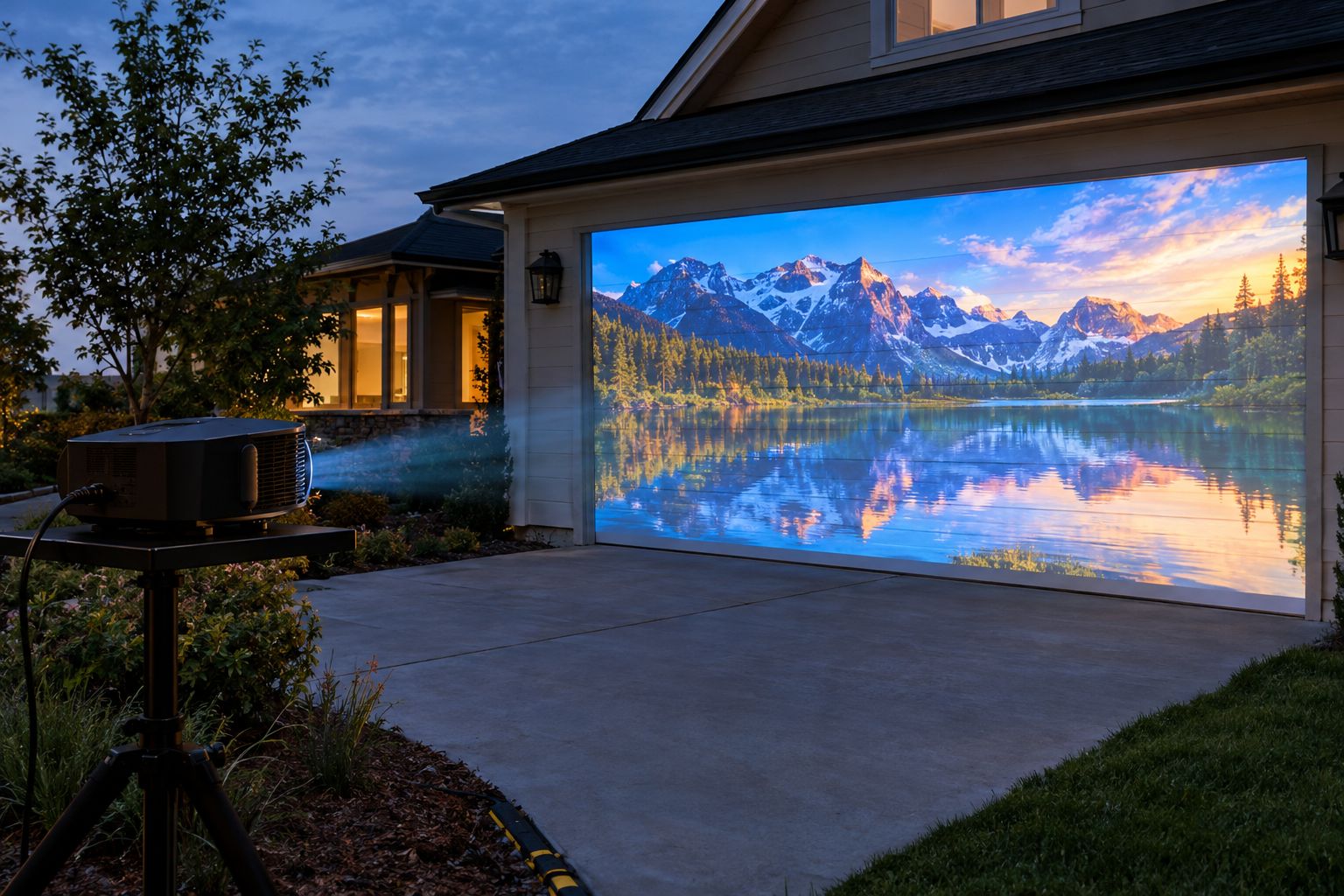
- Garage doors: Animate custom messages or vibrant visuals for parties, holidays, or trick-or-treaters.
- Windows: use Window Mapping Film on the outside of the glass, or Rear Projection Film to project from inside.
- Garden objects: Project onto sculptures, fountains, or even small trees and planters for outdoor ambiance.
Essential Equipment Comparison
| Enclosure Model | Recommended Use | Key Features |
|---|---|---|
| Homeline | Primary residential solution for mild outdoor conditions | Fan-cooled, compact, blends into home settings |
| Small Integrator | Professional-grade projects, higher projector demands | Fan-cooled, robust, fits select professional compact projectors |
| Small Defender | Salt-air, coastal, or humid harsh environments (projector fit required) | Climate-controlled, specialized for 500W or lower projector thermal load |
Note: For advanced users or atypical large projectors, commercial Defender enclosures (Medium/Large/XL) may be necessary but are not mainstream residential choices.
Choosing and Placing Your Projector
Success starts with the right projector. Consider your home’s throw distance (space from projector to mapped surface), ambient light, and desired brightness. Projectors with higher brightness perform best outdoors, especially if there’s street or security lighting nearby. Short throw projectors are ideal for tight spaces like driveways or side yards.
Carefully measure your available space and ensure your projector’s footprint and lens orientation are compatible with your chosen enclosure (like Homeline). Proper ventilation is crucial for safe, reliable operation in any weather.
Quick Steps: Setting Up Your Projection Mapping
- Measure your home’s facade, window, or object to determine projection area.
- Select a compatible projector and fit-checked Homeline, Integrator, or Defender enclosure.
- Position your projector on stable ground, ensuring proper alignment to the surface.
- Connect power and test image throw—refine placement to avoid obstacles (shrubs, posts, glare).
- Use mapping software to outline key surface features (doors, windows, garage panels, objects).
- Fine-tune calibration and masking for crisp, distortion-free mapped imagery.
Calibrating Your Mapping Software
Whether you’re using beginner-friendly or advanced tools, the process is similar: outline your target area, map physical details (frames, mullions, landscape contours), and apply digital masking to align visuals precisely. Use test patterns first, then iterate until the animation fits exactly onto your surfaces—no spillover or blurry edges.
For complex multi-surface setups (such as garage plus windows or landscape features), plan your content resolution and software warping in advance to simplify the mapping process.
Flexible Celebration Displays
Change scenes for holidays, birthdays, or family events—using one compact setup. No painting or permanent changes needed.
Neighborhood Standout
Wow neighbors and guests with effects ranging from subtle snow to dynamic Halloween or party art, setting your home apart year-round.
Safe, Weather-Ready Equipment
Choose the enclosure for your climate: Homeline for mild weather, Defender for coastal or humid sites.
Electrical and Weather Safety
- Place enclosures securely, avoiding walkways and water runoff.
- Always use grounded, weather-resistant extension cords and GFCI outlets.
- Ensure all cords are protected from pets, traffic, and yard tools.
- Check enclosure airflow and avoid blocking vents with decor or foliage.
- Never operate projectors outside their rated environment or without proper cooling.
- Unplug equipment during storms, heavy rain, or when not in use.
Window Mapping Film and Rear Projection
For windows, two unique projection film options exist:
- Window Mapping Film: goes on the outside of suitable windows and gives projected light a surface to catch, so the show carries across the glass instead of passing through. It stays largely see-through when the projector is off.
- Rear Projection Film: Adheres to the inside of glass or acrylic, allowing discreet, vibrant effects when illuminated from behind—while maintaining privacy and preserving exterior aesthetics.
For guidance on the ideal film for your window size or project, visit Projection Mapping Supply.
Specialty and Commercial Options
If your project requires large-scale projection, extended runtime, or protection against salt air and harsh weather (oceanfront or tropical homes), the Small Defender provides robust, climate-controlled safety (within 500W thermal envelope; always check your projector). Larger Defender enclosures (Medium, Large, XL) are generally reserved for commercial/industrial use rather than typical residential setups.
Ready to Map Your Home? Start with Homeline.
Unlock the full creative potential of your yard, garage, or windows by starting with a projection enclosure built for the realities of home life. Contact our team for personalized projector-fit guidance and product recommendations to ensure reliable, stunning displays from your first test through every celebration. Request your custom quote at Projection Mapping Supply.
Frequently Asked Questions
Do I need a special projector for yard or window mapping?
Not necessarily—many common projectors can be used if their brightness is sufficient and they fit inside a compatible enclosure like Homeline. Short throw and high brightness are preferred for outdoor conditions.
Is the Homeline enclosure waterproof?
No. Homeline is a fan-cooled enclosure for mild conditions, not a waterproof one. For wet, humid or coastal sites, look at the climate-controlled Defender.
Can I use projection mapping year-round?
Yes, you can map your facade, garage, or windows any time—just monitor weather, unplug during storms, and use climate-controlled enclosures only if your environment is extreme or humid.
How do I know if my projector fits?
Measure your projector (including any lens extensions) and confirm with our team that your choice of enclosure (Homeline, Small Integrator, or Small Defender) offers adequate clearance, cooling, and power handling.
What maintenance is needed?
Keep vents and glass clean, check cable connections regularly, and store your enclosure indoors when not in use for extended periods. Avoid exposure to snow buildup or direct sprinkler spray.
Can you help me design custom mapped content?
Ask our team. We can talk through content and mapping tools for your house.